 ABHIJEET AMONKAR
ABHIJEET AMONKAR
ABHIJEET AMONKAR
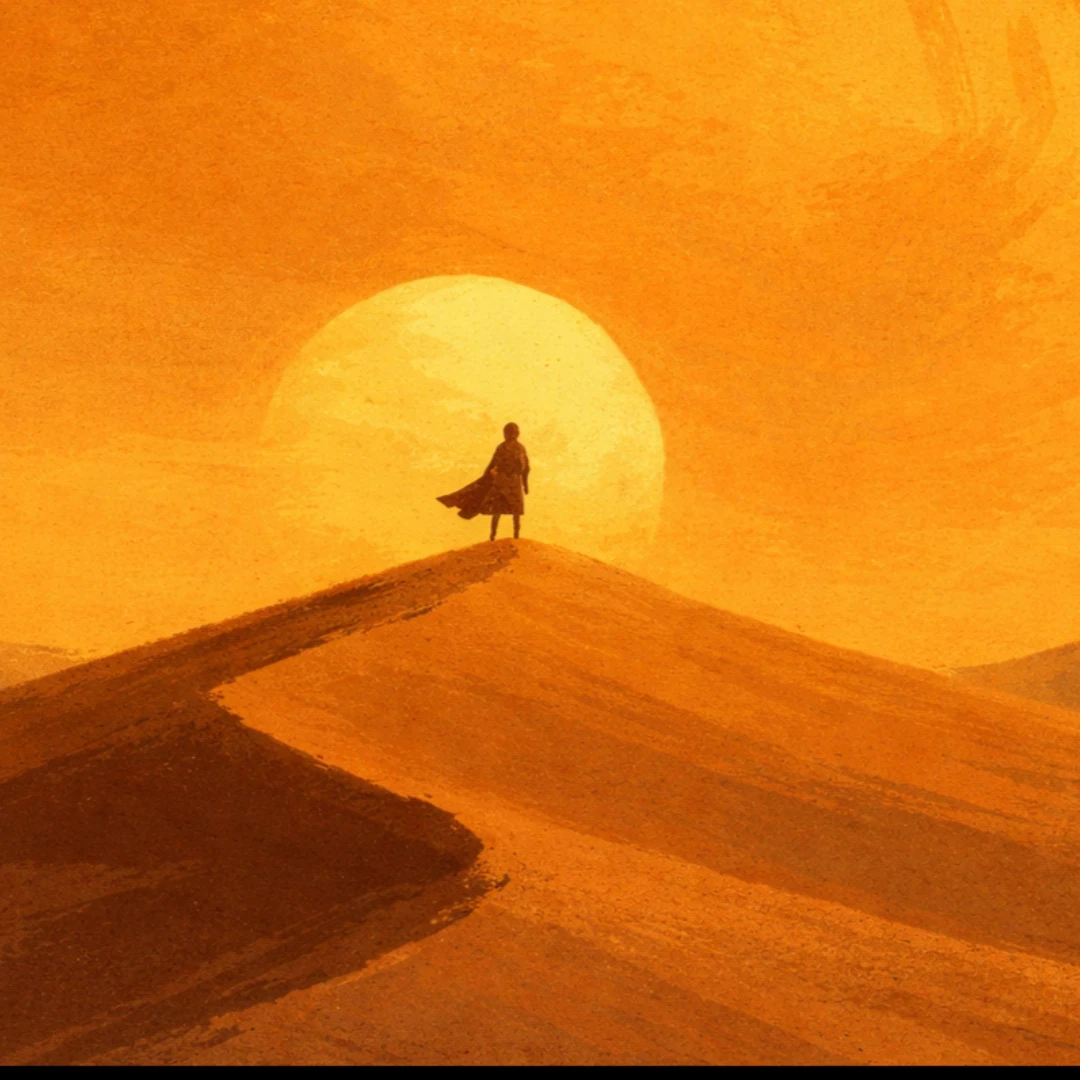
Dune: Part One (2021), directed by Denis Villeneuve, is a meditative and visually monumental adaptation of Dune. Rather than rushing through its narrative, the film embraces patience, immersing the viewer in a vast, intricate world where politics, prophecy, and survival are tightly interwoven. At its center is Paul Atreides, a young heir caught between destiny and doubt, whose journey unfolds not through sudden heroics, but through quiet realization and inner tension.
Paul’s story begins on the oceanic world of Caladan, where life feels stable, almost sheltered. But this sense of calm is short-lived. When House Atreides is tasked with governing the desert planet Arrakis—the only source of the invaluable spice melange—Paul is thrust into a harsh and unfamiliar reality. Arrakis is not just a setting; it is a force in itself, shaping everyone who enters it. The unforgiving desert, with its endless dunes and looming sandworms, reflects the uncertainty Paul feels as he begins to understand the weight of his future.
What makes Dune: Part One compelling is its focus on awareness and transformation. Paul is not yet a hero in the traditional sense. He is observant, conflicted, and often overwhelmed by visions of what might come. These glimpses of the future do not empower him immediately; instead, they burden him with questions about identity, purpose, and control. The film suggests that true growth begins with understanding—learning to see clearly before acting decisively.
The theme of living in the moment is explored in a subtle but powerful way. On Arrakis, survival depends on presence: every step in the desert must be measured, every sound considered. This idea mirrors Paul’s internal journey. He cannot rely solely on prophecy or expectation; he must learn to respond to the reality in front of him. His gradual shift from passive observer to someone willing to engage with his circumstances marks the beginning of his transformation.
The supporting characters add depth to this journey. Lady Jessica’s strength and emotional complexity, Duke Leto’s sense of duty, and Duncan Idaho’s loyalty all contribute to Paul’s understanding of leadership and sacrifice. Meanwhile, the Fremen—native to Arrakis—represent a way of life rooted in resilience and harmony with the environment, offering Paul a glimpse of what it means to truly belong rather than simply rule.
Visually and sonically, the film reinforces its themes. The scale of the landscapes, the deliberate pacing, and Hans Zimmer’s immersive score create an atmosphere that demands attention and patience. Dune: Part One does not seek immediate gratification; it asks the viewer to sit with its world, much like Paul must learn to sit with his destiny.
Ultimately, Dune: Part One is a story about beginnings—not of action, but of understanding. It reminds us that stepping into our future requires more than ambition; it requires clarity, presence, and the willingness to face uncertainty. Paul Atreides’ journey is only just unfolding, but in these early steps, we see the foundation of something far greater: the moment when a dream of who we might become starts to meet the reality of who we are.