Character Design · Illustration · Creative Concepts · Writing

Characters.
Visual Ideas.
Stories.

I draw them. I write them. Sometimes I do both.

Character designer, visual storyteller and writer helping brands, studios and creators turn ideas into something people remember.

Selected Work

Things I've made.

Some were for clients. Some started as assignments. Some simply refused to leave my head.

Have an idea?

Let's figure out what it needs.

Character Design

Characters with personalities, problems and a reason to exist.

EXPLORE CHARACTERS →

Illustration & Visuals

Original visuals for stories, campaigns and ideas.

EXPLORE VISUAL WORK →

Creative Concepts

Campaign thoughts, concepts and visual directions before execution begins.

SEE CREATIVE WORK →

Words & Stories

Copy, characters and stories when words are the better tool.

READ MY WORDS →

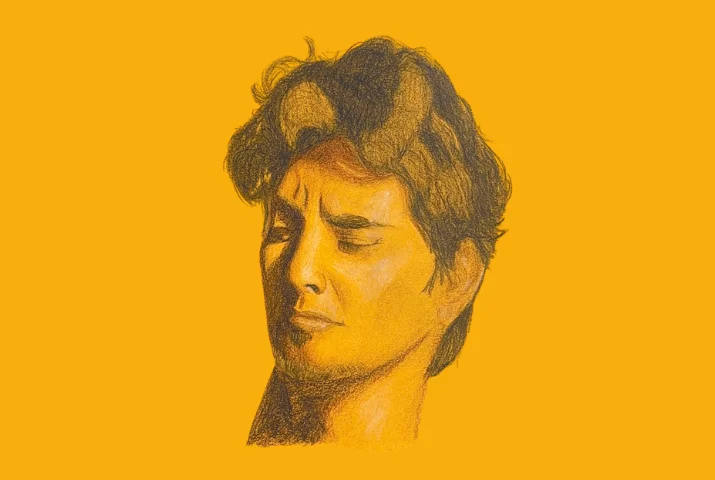
Meet someone who doesn't exist

Rustom Fernandes
Retired supervillain. Amateur gardener. Still holds grudges.

Twenty-two years plotting the downfall of a city that never noticed him. Now spends his mornings pruning roses and his evenings insisting the neighbourhood watch is "definitely still surveillance."

I don't start with a medium.I start with an idea.

Then I figure out whether it needs to be drawn, designed or written.

A signature series

People who don't exist.

Characters I've met entirely in my head.

The Man Who Apologised to Furniture

Character Story

too polite, obviously.

The Woman Who Never Finished a Cup of Tea

Character Story

seventeen mugs. no regrets.

The Boy Who Collected Other People's Excuses

Character Story

has a filing system.

Work with me

Need a character? A visual? Or just a better idea?

Tell Me About Your Project

Recently in words

Sometimes I write the story.

Rick Riordan’s Percy Jackson & the Olympians

Review

Rick Riordan’s Percy Jackson & the Olympians

Rick Riordan’s Percy Jackson & the Olympians series is a thrilling blend of mythology, adventure, and humor that has captivated readers since the first book, The Lightning Thief, was published in 2005. Spanning five books, the series follows Percy Jackson, a twelve-year-old boy who discovers he is a demigod— one of the Greek Olympian gods. As Percy is thrust into a world of monsters, quests, and prophecies, he must navigate the challenges of both being a demigod and an ordinary teenager. With its fast-paced storytelling, witty dialogue, and deep emotional themes, the series has become a modern classic in young adult literature. The story kicks off with The Lightning Thief, where Percy learns of his divine heritage and is sent to Camp Half-Blood, a sanctuary for demigods. He soon embarks on a quest to retrieve Zeus’s stolen lightning bolt and clear his name. Each book in the series builds upon the previous one, with increasing stakes as Percy and his friends—Annabeth Chase, a daughter of Athena, and Grover Underwood, a satyr—face greater challenges. By the final installment, The Last Olympian, Percy must lead the demigods of Camp Half-Blood in an epic battle against the Titan lord, who threatens to overthrow Olympus. A major strength of the series is its exploration of identity, destiny, and friendship. Percy struggles with feelings of abandonment by his father and his place in the world, mirroring the challenges of many young readers. Riordan also introduces themes of loyalty and sacrifice, particularly through the friendships Percy forms. Additionally, the series subtly critiques power structures, as the gods often fail to take responsibility for their actions, leaving their demigod children to deal with the consequences. Percy Jackson is a relatable and well-developed protagonist. He is sarcastic, fiercely loyal, and deeply compassionate, making him an easy character to root for. Unlike many traditional heroes, Percy is not perfect—he has ADHD and dyslexia, struggles with self-doubt, and often acts impulsively. However, these qualities make him feel authentic and allow for significant character growth throughout the series. Riordan’s writing is engaging and accessible, filled with humor that balances the darker elements of the story- Percy’s sarcastic narration and witty chapter titles adding a unique charm. Riordan’s ability to make mythology relatable to modern readers—whether through gods using cell phones or centaurs wearing Hawaiian shirts—ensures that the books never feel dry or overly serious. His modern take on Greek mythology makes the series both educational and entertaining. He seamlessly integrates ancient myths into contemporary settings, allowing young readers to learn about figures like Medusa, Daedalus, and Hades in a fun and immersive way. The Percy Jackson series has had a lasting impact on young adult literature, inspiring a new generation of readers. It has spawned sequels (The Heroes of Olympus, The Trials of Apollo), spin-offs, and even a much-anticipated season 2 for its Disney+ adaptation. It has also contributed to greater representation in literature, particularly in its portrayal of characters with learning disabilities as heroes rather than obstacles. In conclusion, Percy Jackson & the Olympians is a must-read for fans of adventure, mythology, and humor. With its compelling characters, rich world-building, and heartfelt themes, it remains one of the most beloved book series of the 21st century.

3 MIN Read

The Secret Life of Walter Mitty

Review

The Secret Life of Walter Mitty

The Secret Life of Walter Mitty (2013), directed by and starring Ben Stiller, is a beautifully crafted film that blends adventure, introspection, and heartfelt emotion. At its core, it is a story about an ordinary man who escapes the monotony of his daily life through vivid daydreams—grand, cinematic fantasies where he becomes the bold, fearless version of himself he wishes he could be. What makes the film so impactful is the way it transforms this quiet, habitual daydreamer into someone who learns to fully embrace the real world and the possibilities it offers. Walter Mitty begins as a character many of us can relate to. He works a routine job at Life magazine, frequently zones out, and often finds himself imagining thrilling situations as a way of coping with the emptiness he feels. His dreams are more than escapism—they are expressions of his longing: for adventure, connection, purpose, and courage. These imagined moments give viewers insight into Walter’s emotional world, showing us what he wishes he could say or do when everyday life feels too small. The brilliance of the film lies in its shift from fantasy to reality. As Walter reluctantly embarks on a global journey to track down a missing photograph, the line between his imagined bravery and his real-world actions begins to blur. Slowly, he starts living out the very adventures he once only fantasized about—longboarding down Icelandic hillsides, jumping into freezing Arctic waters, trekking through the Himalayas. These scenes are filmed with breathtaking cinematography that underscores the beauty of stepping outside one’s comfort zone. Walter’s journey is symbolic of something universal: the moment you realize that life is happening right now, and that waiting for the perfect time to live boldly will only keep you stuck. His transformation isn’t sudden or dramatic, but gradual and quietly powerful. He begins making choices for himself, taking risks, and seeing the world with new eyes. By the end, Walter isn’t a different person; he is finally the version of himself he always imagined—just without needing a fantasy to get there. The film also delivers a thoughtful message about daydreaming. It doesn’t criticize Walter for imagining better things—it shows that dreaming can be a source of inspiration and self-understanding. But it also gently reminds us that dreams alone are not enough. They should guide us, not replace the life we are meant to live. Daydreams can reveal our deepest desires, but it is only by stepping into the present that we can actually fulfill them. Ultimately, The Secret Life of Walter Mitty encourages viewers to pay attention—to the world around them, to opportunities they might overlook, and to the people who matter. It reminds us that living in the moment doesn’t mean abandoning our dreams; it means taking the first real step toward them. The film is a heartfelt celebration of courage, curiosity, and the quiet brilliance of an ordinary life made extraordinary.

3MIN READ

Dune Part One

Review

Dune Part One

Dune: Part One (2021), directed by Denis Villeneuve, is a meditative and visually monumental adaptation of Dune. Rather than rushing through its narrative, the film embraces patience, immersing the viewer in a vast, intricate world where politics, prophecy, and survival are tightly interwoven. At its center is Paul Atreides, a young heir caught between destiny and doubt, whose journey unfolds not through sudden heroics, but through quiet realization and inner tension. Paul’s story begins on the oceanic world of Caladan, where life feels stable, almost sheltered. But this sense of calm is short-lived. When House Atreides is tasked with governing the desert planet Arrakis—the only source of the invaluable spice melange—Paul is thrust into a harsh and unfamiliar reality. Arrakis is not just a setting; it is a force in itself, shaping everyone who enters it. The unforgiving desert, with its endless dunes and looming sandworms, reflects the uncertainty Paul feels as he begins to understand the weight of his future. What makes Dune: Part One compelling is its focus on awareness and transformation. Paul is not yet a hero in the traditional sense. He is observant, conflicted, and often overwhelmed by visions of what might come. These glimpses of the future do not empower him immediately; instead, they burden him with questions about identity, purpose, and control. The film suggests that true growth begins with understanding—learning to see clearly before acting decisively. The theme of living in the moment is explored in a subtle but powerful way. On Arrakis, survival depends on presence: every step in the desert must be measured, every sound considered. This idea mirrors Paul’s internal journey. He cannot rely solely on prophecy or expectation; he must learn to respond to the reality in front of him. His gradual shift from passive observer to someone willing to engage with his circumstances marks the beginning of his transformation. The supporting characters add depth to this journey. Lady Jessica’s strength and emotional complexity, Duke Leto’s sense of duty, and Duncan Idaho’s loyalty all contribute to Paul’s understanding of leadership and sacrifice. Meanwhile, the Fremen—native to Arrakis—represent a way of life rooted in resilience and harmony with the environment, offering Paul a glimpse of what it means to truly belong rather than simply rule. Visually and sonically, the film reinforces its themes. The scale of the landscapes, the deliberate pacing, and Hans Zimmer’s immersive score create an atmosphere that demands attention and patience. Dune: Part One does not seek immediate gratification; it asks the viewer to sit with its world, much like Paul must learn to sit with his destiny. Ultimately, Dune: Part One is a story about beginnings—not of action, but of understanding. It reminds us that stepping into our future requires more than ambition; it requires clarity, presence, and the willingness to face uncertainty. Paul Atreides’ journey is only just unfolding, but in these early steps, we see the foundation of something far greater: the moment when a dream of who we might become starts to meet the reality of who we are.

3 Min Read

Informal · constantly updated

Currently in my head.

a bird that only flies backwards.

headline: "the sun called in sick."

colour test — too loud, try again.

a city with no straight roads.

gesture study, 30 sec each.